


Table of Contents
- What Hot Spots Are and How They Appear
- How to Clean a Hot Spot on a Dog
- Natural Remedies for Hot Spots: What's Safe and What to Skip
- Choosing a Dog Hot Spot Spray
- How Long Do Dog Hot Spots Take to Heal?
- When to See a Vet for a Dog Hot Spot
- Preventing Hot Spots from Coming Back
- Frequently Asked Questions
Last Updated: October 15, 2026
What Hot Spots Are and How They Appear
A hot spot is a fast-growing patch of inflamed skin that appears when a dog licks, chews, or scratches one area until the skin breaks down, which is why owners search for how to treat hot spots fast.
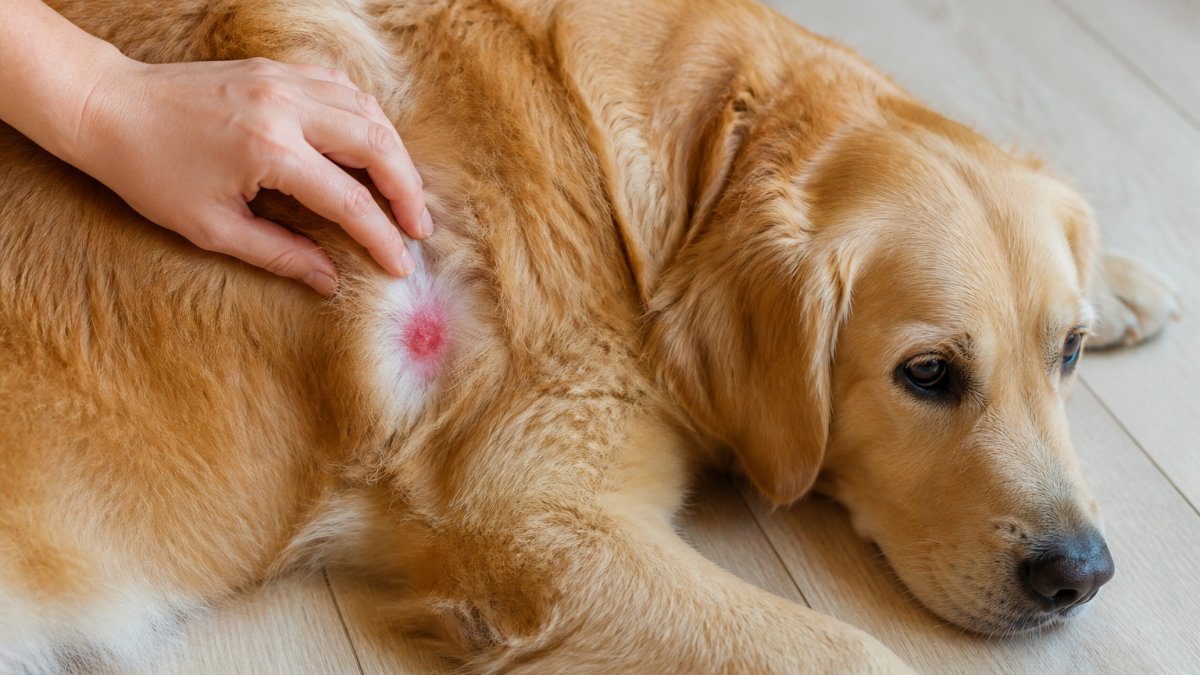
The sore isn't the real problem, the licking is. Something triggered the itch, and scratching turned a small irritation into an open wound.
Symptoms: Redness, Itching, Oozing, and Hair Loss
Signs appear together and worsen fast. Watch for:
- Redness and swelling in one focused area
- Constant itching, licking, and chewing at the same spot
- Oozing, discharge, or crusting on the surface
A hot spot spreads if your dog keeps at it: moisture from licking feeds bacteria, which worsens the itch. That loop is why fast action matters.
How to Clean a Hot Spot on a Dog
Cleaning is the first real step: remove debris, keep the skin dry, and stop your dog from restarting the cycle.
Here's how to clean a hot spot on a dog, step by step:
- Trim the surrounding fur. Hair traps moisture and hides the spot's size. Use blunt-tipped scissors and leave a small margin.
- Rinse with a mild soap or antibacterial cleanser. Chlorhexidine is common in vet-recommended cleansers; ask your vet which suits your dog.
- Pat dry with a clean cloth. Don't rub. Friction irritates the skin further.
- Apply a cool compress for a few minutes to calm the itch.
- Keep the skin dry between cleanings. Moisture is the enemy here.
Trimming Fur and Keeping the Skin Dry
Fur and moisture work together against you: matted fur holds dampness against the skin, where bacteria and yeast take hold.
Trim carefully, and never shave to the skin unless your vet advises it, exposed skin irritates fast.
A gentle daily spray can help here. Our hypochlorous acid spray uses the same molecule your pet's immune system makes, and it's designed for daily skin, coat, and paw care.

Natural Remedies for Hot Spots: What's Safe and What to Skip
Natural remedies fall into three jobs:
- Soothing, calming itch and pain so your dog stops traumatizing the skin.
- Drying, reducing surface moisture that feeds bacteria and yeast.
- Antimicrobial, reducing the bacterial load in an infected lesion.
Most natural ingredients do job one well, job two partially, and job three poorly. A hot spot is usually a bacterial infection on top of an itch trigger: a cool compress comforts your dog but won't clear the infection.
Safe for most dogs, used correctly
- Aloe vera, use pure inner-leaf gel, not whole-leaf latex, a laxative that can cause vomiting and diarrhea if licked off. Apply thinly and let dry; a thick layer traps moisture.
- Chamomile, brew strong tea, cool it, and use as a compress for 3-5 minutes. Skip if your dog has a ragweed or daisy-family allergy.
- Calendula, sold as a diluted rinse or infused water; soothing and mildly antimicrobial. Dilute per the label, since undiluted tinctures contain alcohol and sting open skin.
Skip these on an open hot spot
- Apple cider vinegar, acidic enough to sting broken skin and slow healing. Sometimes recommended diluted for intact skin, but a hot spot is not intact skin.
- Hydrogen peroxide, damages healthy tissue along with bacteria and delays wound closure. Not a wound cleaner for pets.
- Essential oils, the risk list includes tea tree, eucalyptus, peppermint, citrus, wintergreen, pine, and cinnamon. Cats are especially vulnerable because they cannot metabolize many of these compounds; skin exposure alone can cause tremors, drooling, and worse. Dogs can also be poisoned by licking oils off their coat.
A realistic word on evidence
Natural remedies can ease itching, reduce surface moisture, and support the skin barrier, but they do not reliably treat hot spots, a bacterial infection, or the underlying trigger, fleas, allergies, moisture, or a wound your dog won't leave alone. If the spot is oozing, spreading, hot to the touch, or smells, you're past home remedies. Use the soothing options above for comfort while you arrange veterinary care, not instead of it.
A quick safety test before you apply anything
- Is the skin broken? If yes, skip anything acidic, alcoholic, or essential-oil based.
- Can your dog reach it to lick? If yes, only use ingredients you'd be comfortable with your dog swallowing in small amounts.
- Does it contain an essential oil? If yes, don't use it on a pet unless a veterinarian prescribed it.
If you want a single low-risk option for daily cleaning between vet visits, a hypochlorous acid spray is one of the few things you can apply to broken skin and let your dog lick without a toxicity concern. Our hypochlorous acid spray uses the same molecule your pet's immune system makes, and it's designed for daily skin, coat, and paw care.
Choosing a Dog Hot Spot Spray
A good dog hot spot spray should calm the skin, be safe if licked, and have a short, readable ingredient list.
Most sprays fall into three groups:
- Antiseptic sprays with chlorhexidine or similar actives
- Soothing sprays with aloe, oatmeal, or chamomile
- Hypochlorous acid sprays, which mimic what the immune system already produces
Here's how they compare:
| Spray Type | Best For | Watch Out For |
|---|---|---|
| Chlorhexidine antiseptic | Active infection, vet-recommended use | Can dry out skin with overuse |
| Soothing botanical | Mild itch and redness | Little effect on bacteria |
| Hypochlorous acid | Daily cleaning, sensitive skin | Needs regular use to help |
Our Everyday Pet Spray sits in that third group. It's $7.99, made in Canada, and designed for daily use on skin, coat, and paws.
How Long Do Dog Hot Spots Take to Heal?
Most hot spots start improving within a few days of consistent care, and many clear up within one to two weeks. Mild spots heal faster. Infected or large ones take longer.
How long do dog hot spots take to heal depends on three things:
- How quickly you start treatment
- Whether infection is present
- Whether your dog can stop licking the area
If the spot keeps growing after 48 hours of care, or it's not improving after a week, that's your signal to call your vet.
When to See a Vet for a Dog Hot Spot
Home care suits a small, superficial, first-time spot on an otherwise well dog. Everything else belongs with a veterinarian. Sort the situation into one of three tiers.
Tier 1, Cautious home care is reasonable
All of these should be true:
- The spot is small, roughly coin-sized or smaller.
- It is superficial, red and moist, not deeply ulcerated.
- It is not spreading over 24 hours of consistent care.
If any of those is not true, move to Tier 2 or 3.
Tier 2, Call your vet within a day
- The spot is growing despite 24-48 hours of cleaning and licking prevention.
- There is pus, heavy discharge, or a strong odor.
- The skin feels hot or looks swollen beyond the visible patch.
Tier 3, Same-day veterinary care
- The spot is spreading rapidly, visibly larger within hours.
- Your dog is lethargic, off food, or running a fever.
- There is deep ulceration, bleeding, or tissue that looks black or dying.
What your vet will likely do
For a mild spot, a vet may clip the fur, clean the area, and send you home with a topical and a cone. For a moderate or infected spot, expect:
- Clipping and cleaning under light sedation if the area is painful.
- Topical antimicrobial, often chlorhexidine or a combination product.
- Oral antibiotics if the infection is deep or widespread.
A simple daily monitoring plan
Once you start care, track five things daily and write them down. This turns guesswork into a decision.
| What to track | What improvement looks like | What should trigger a call |
|---|---|---|
| Size | Same or smaller each day | Larger two days in a row |
| Redness | Fading toward normal skin color | Spreading redness or a red ring |
| Discharge | Drying, crusting, no new ooze | Pus, green/yellow fluid, or a new smell |
| Pain | Tolerates touch and movement | Flinches, guards, or limps |
| Behavior | Eating, playing, sleeping normally | Lethargy, hiding, off food |
Thresholds that mean call the vet: no improvement after 48 hours of consistent care; worsening at any point; new symptoms such as fever, vomiting, or refusal to eat; or a spot that heals and reappears in the same place within a few weeks.
Why recurring hot spots need a different conversation
A single hot spot is often just a scratch that got out of hand. Three or more in a year, or repeated spots in the same location, almost always points to an underlying driver: flea allergy dermatitis, environmental or food allergies, a chronic ear infection, anal gland discomfort, arthritis pain that makes a dog chew a joint, or a coat that stays damp.
The Canadian Veterinary Medical Association's pet health resources offer owner guidance on skin conditions and when to seek care.
Preventing Hot Spots from Coming Back
Prevention comes down to finding the trigger and breaking the itch cycle. Recurring hot spots almost always have a reason.
Common triggers include:
- Allergies, especially to fleas or food
- Flea bites and other parasites
- Wounds or small scrapes your dog won't leave alone
Match prevention to your dog's coat and lifestyle:
- Thick-coated dogs: dry thoroughly after water contact, and check under the collar.
- Active outdoor dogs: rinse and dry paws and coat after hikes or park visits.
- Allergy-prone dogs: work with your vet on the underlying cause.
A daily spray helps keep skin clean between baths. Our formula supports skin, coat, and paw care without a heavy scent, so picky cats and dogs tolerate it.
The single most useful habit is a weekly skin check. Run your hands over your dog's coat, part the fur, and look for small red spots before they become big ones. Five minutes a week beats a vet bill.
Frequently Asked Questions
Can hot spots heal on their own?
Very mild hot spots can sometimes settle if you stop the licking and keep the area clean and dry, but most get worse without help. Moisture, bacteria, and continued chewing drive the cycle, so a spot that is oozing, spreading, or painful needs active care. If it has not improved after two or three days of gentle cleaning and preventing licking, or if it grows, contact your veterinarian.
What is the best home remedy for hot spots on dogs?
Start with gentle cleaning and drying rather than strong products. A mild soap or an antibacterial cleanser, followed by patting the skin dry, removes discharge and debris. A dog hot spot spray with hypochlorous acid is a gentle option for daily cleansing because it is lick-safe and designed for daily care. Avoid alcohol, hydrogen peroxide, and essential oils, which can irritate inflamed skin further.
How do I stop my dog from licking or scratching a hot spot?
Blocking access is the single most important step. A recovery cone or soft collar, a light bandage over the area, or a pet shirt can all work. Keep the fur around the spot trimmed short so it stays dry and does not mat, and redirect your dog with a chew toy or a walk when they start to lick. Without this step, most natural treatments will not keep up with the damage.
When should I take my dog to the vet for a hot spot?
See a vet if the spot is larger than a few centimeters, is spreading quickly, smells bad, or has thick yellow-green discharge. Also go if your dog seems painful, lethargic, or off their food, if the spot is near the eye or ear, or if it keeps coming back. Recurring hot spots often point to an underlying cause such as allergies, fleas, or parasites that needs diagnosis.
Hot spots move fast, and the window to treat them at home is short. e11ement Pet makes a gentle hypochlorous acid spray for daily skin, coat, and paw care, made in Canada with just water, salt, and HOCl. It's lick-safe, unscented, and easy to work into your routine. Get started with e11ement Pet and keep your companion's skin clean, calm, and comfortable.


