


Table of Contents
- Can You Use Skin Spray on Rabbits? What You Need to Know First
- Hypochlorous Acid Spray for Rabbits: How It Works and Why It's Considered Safe
- How to Apply Topical Spray to a Rabbit Without Stressing Them Out
- Rabbit Itching and Scratching: When a Spray Helps and When It Doesn't
- What to Do if a Rabbit Licks Topical Spray
- Alternatives to Skin Spray for Rabbit Skin Issues
- When to Call Your Veterinarian
- Frequently Asked Questions
Last Updated: October 16, 2026
Can You Use Skin Spray on Rabbits? What You Need to Know First
So, can I use skin spray on rabbits? Yes, but only if the formula is made for small animals and free of ingredients rabbits cannot safely groom off their fur. Here is the part most owners miss: a rabbit's skin is far thinner and more delicate than a dog's or cat's, so a product that works fine on your dog may cause real harm to your rabbit.
At e11ement Pet, we get this question often from rabbit owners who want a gentle way to care for dry patches, minor irritations, and everyday coat hygiene. This guide explains which sprays are safe, how to apply one without stressing your rabbit, and when to skip the spray and call your vet instead.
The short answer: a gentle, lick-safe spray can help with minor skin care. But you need to check the label first. Some common spray ingredients are toxic to rabbits, and rabbits groom themselves constantly, so anything on their fur ends up in their mouth.
rabbit care guidance from the Ontario SPCA and Humane Society
Why Rabbit Skin Is Different From Dog or Cat Skin
Rabbit skin is thin, fragile, and prone to tearing. It also has very little fat under it, which means irritants reach deeper layers faster than they would on a dog.
Rabbits are prey animals, so they hide pain and skin problems well. By the time you notice flaking or redness, the issue may have been building for a while.
A few things make rabbit skin unique:
- It tears easily, even from rough handling
- It reacts fast to harsh soaps, alcohols, and essential oils
- Rabbits cannot vomit, so they cannot clear a toxic substance the way a dog can
- Constant grooming means anything on the coat gets swallowed
That last point matters most. Any spray you use has to be safe if your rabbit ingests a small amount while grooming.
Hypochlorous Acid Spray for Rabbits: How It Works and Why It's Considered Safe
Hypochlorous acid spray for rabbits is a topical mist that uses a molecule your pet's own immune system already produces to fight germs. It is gentle, it does not sting, and it is safe if a rabbit licks a small amount off its fur.
The reason it is well tolerated comes down to how the body sees it. Hypochlorous acid is not a foreign chemical to your rabbit. White blood cells make it naturally to handle bacteria and irritants. A well-made spray simply puts more of that same molecule to work on the surface of the skin.
What makes a quality spray:
- A short, transparent ingredient list
- No alcohol, no fragrance, no essential oils
- A pH balanced to match skin
- Made for daily use, not just for wounds
For rabbit owners who want a gentle daily option, a hypochlorous acid spray fits well into a routine. It supports skin care, coat care, and paw care without harsh additives. Ours is made in Canada.
Ingredients to Avoid in Any Rabbit Skin Spray
Some ingredients show up in pet sprays and should never go on a rabbit. Check every label before you buy.
Avoid these:
- Essential oils such as tea tree, eucalyptus, peppermint, and citrus
- Alcohol and alcohol-based carriers
- Fragrances and dyes
- Hydrogen peroxide at cleaning strength
- Human antibiotic creams unless your vet prescribes them
- Shampoos and sprays labeled for dogs only
If a label lists an ingredient you do not recognize, look it up before you spray. When in doubt, do not use it.
How to Apply Topical Spray to a Rabbit Without Stressing Them Out
The key to applying topical spray to a rabbit is calm, short sessions. Rabbits stress easily, and a stressed rabbit can injure itself or refuse handling for days. Keep the whole process under a couple of minutes and stop if your rabbit panics.
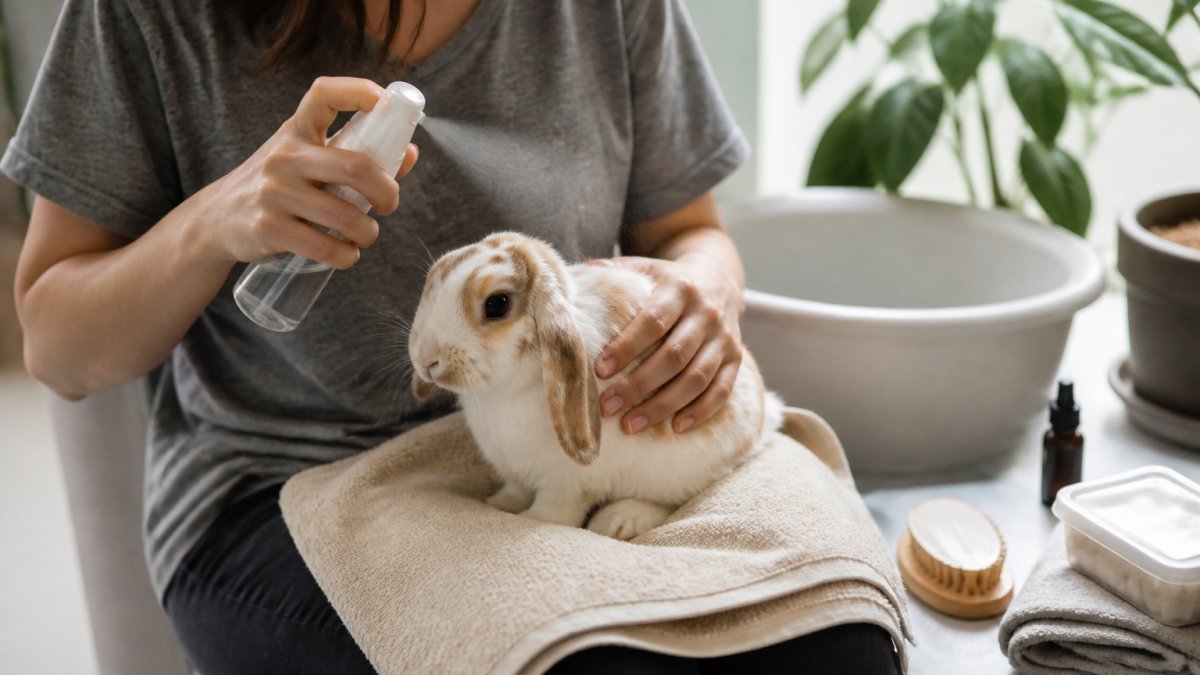
Step-by-Step Application
Follow these steps each time:
- Pick a quiet spot. Use a low-traffic room with no loud noises.
- Lay down a towel. This gives your rabbit grip and protects your lap.
- Hold your rabbit correctly. Support the chest and hindquarters together. Never lift by the ears or scruff.
- Spray the cloth first, not the rabbit. Mist a soft cloth or cotton pad, then wipe the area.
- Work in one direction. Wipe with the fur, not against it.
- Keep it short. Aim for under two minutes per session.
- Reward and release. Give a treat and let your rabbit settle.
If your rabbit struggles, stop and try again later. Forcing it makes the next session harder.
Rabbit Itching and Scratching: When a Spray Helps and When It Doesn't
Rabbit itching and scratching can have many causes, and a spray only helps with some of them. A gentle spray can soothe minor surface irritation, dry skin, and small scrapes. It will not fix the cause of a deeper problem.
A spray may help with:
- Minor dry patches
- Small surface scrapes
- Everyday coat and paw cleaning
- Mild irritation after a vet visit
A spray will not help with:
- Mites or fleas, which need proper treatment
- Ringworm or other fungal infections
- Abscesses or open wounds
- Dental problems that cause drooling and chin irritation
- Allergies that need a vet's diagnosis
What to Do if a Rabbit Licks Topical Spray
If your rabbit licks topical spray, stay calm and check what was on the fur, and this is also where the question of can I use skin spray on rabbits comes down to the ingredient list. A lick-safe product made for small animals is not a problem in small amounts. A harsh or toxic product is a different story.
Here is what to do:
- Lick-safe spray: Wipe off the excess and watch your rabbit. No action needed in most cases.
- Harsh product: Rinse the area with lukewarm water and call your vet right away.
- Signs of trouble: Drooling, wobbling, refusing food, or hiding. Call your vet now.
Rabbits groom constantly, so assume some product will be swallowed. That is exactly why the ingredient list matters more than the label's claims.
Alternatives to Skin Spray for Rabbit Skin Issues
Spray is not your only option. Several gentler methods work well for minor rabbit skin care, and some are better for certain problems.
Try these alternatives:
- A damp cloth wipe. Warm water on a soft cloth removes surface dirt without any product.
- A soft brush. Regular brushing lifts dead fur and spreads natural oils.
- A plain warm bath. Only if your vet approves it, and never for a rabbit that is unwell.
- Diet checks. Poor hay intake and low fiber affect coat and skin health.
- A vet exam. The right move for any issue that does not clear up in a few days.
A simple rule: if the problem is surface-level, gentle cleaning may be enough. If it keeps coming back, the cause is underneath.
When to Call Your Veterinarian
Call your vet if your rabbit's skin problem does not improve within a few days, or if you see any warning signs. Rabbits decline fast, so early action matters.
Contact a vet if you notice:
- Open wounds, bleeding, or pus
- Hair loss spreading across the body
- Constant scratching that breaks the skin
- Refusing food or water
- Lethargy or hiding
- Drooling or a wet chin
A vet can check for mites, fungus, and dental issues that a spray cannot fix. Getting the diagnosis right saves you time and helps your rabbit feel better sooner.
Frequently Asked Questions
Can I use skin spray on my rabbit?
Yes, but only if the formula is specifically safe for rabbits. Hypochlorous acid spray is a common choice because it uses the same molecule a rabbit's immune system produces naturally. Avoid sprays containing essential oils, alcohol, tea tree, or steroids, which are toxic or irritating to rabbits. Always check the label for rabbit-safe ingredients and test on a small patch of skin first.
Is hypochlorous acid spray safe for rabbits?
Hypochlorous acid spray is generally considered gentle enough for rabbit skin when used as directed. It contains no alcohol, fragrance, or essential oils that could harm a rabbit. Because rabbits groom themselves constantly, any topical product must be lick-safe. A hypochlorous acid spray for rabbits fits that requirement, but stop use and contact your vet if you notice redness, swelling, or behavior changes.
What should I do if my rabbit licks skin spray?
If your rabbit licks a small amount of a lick-safe hypochlorous acid spray, there is usually no cause for concern. Offer fresh water and monitor for drooling, loss of appetite, or lethargy. If the spray contained essential oils, alcohol, or other toxic ingredients, contact your veterinarian or an animal poison helpline immediately. Keep the product label handy so you can list ingredients.
How do I apply a topical spray to a rabbit safely?
Hold your rabbit securely on a towel-covered surface. Part the fur to expose the affected area, then mist from about 15 centimeters away. Avoid the eyes, ears, and nose. Let the area air-dry or pat gently. Apply once or twice daily unless your vet advises otherwise. Reward your rabbit with a treat afterward to keep the experience positive.
Rabbit skin care comes down to gentle products and quick action. When minor irritation shows up, a lick-safe spray can help you stay on top of it without harsh chemicals. e11ement Pet makes a hypochlorous acid spray that uses the same molecule your rabbit's immune system produces naturally, made in Canada for daily skin, coat, and paw care. Shop Now and give your rabbit gentle, everyday support.


