


Table of Contents
- Why Lick-Safe Paw Cleaning Matters
- Dog Licking Paws Causes: What the Licking Is Telling You
- How to Clean Dog Paws After a Walk
- Hypochlorous Acid Spray for Dogs: How It Works and Why It's Lick-Safe
- Household Cleaners Toxic to Dogs: What Never Goes Near Paws
- What to Look For in a Safe Pet Paw Cleaner for Licking
- Frequently Asked Questions
Last Updated: October 18, 2026
Why Lick-Safe Paw Cleaning Matters
A safe pet paw cleaner for licking has to pass a harder test than any other grooming product. Your dog will lick it off. That is not a maybe. It is a near certainty.
Dogs clean themselves with their tongues. A paw wipe, spray, or soak ends up in their mouth within minutes. So the question is not just "does this clean?" It is "is this safe to swallow in small amounts?" That changes how you shop.
At e11ement Pet, we built our everyday spray around that exact problem. The formula is water, salt, and hypochlorous acid. Nothing else. It uses the same molecule your pet's immune system makes on its own.
Below, we explain what your dog's paw licking is telling you, how to clean paws after a walk, and which cleaners should never touch a paw. We also cover what to check on any label before you buy.
Dog Licking Paws Causes: What the Licking Is Telling You
Paw licking is normal in short bursts. Constant licking is a message. Your dog is telling you something is wrong.
Common causes include:
- Allergies to grass, pollen, or a new food
- Irritants like road salt, ice melt, or lawn chemicals
- Dry or cracked pads from heat or cold
- Small cuts or foreign objects between the toes
- Yeast or bacterial growth in damp fur
- Boredom or stress (yes, really)
Winter is a big one. Road salt and ice melt sit on sidewalks and burn paw pads. A dog that licks after every winter walk is often reacting to salt, not a skin disease.
A good rule: clean paws after walks, then watch. If the licking stops, the cause was surface irritants. If it continues, get it checked.
How to Clean Dog Paws After a Walk
Cleaning paws after a walk takes about two minutes. Do it at the door, before your dog settles in.
Here is the routine we recommend:
- Wipe first. Use a soft cloth to remove mud, salt, and grit.
- Check between the toes. Look for cuts, burrs, or swelling.
- Spray the pads and paw tops. Hold the bottle about 15 cm away.
- Let it air dry. No rinsing needed for a lick-safe formula.
- Dry the fur with a towel in cold weather.
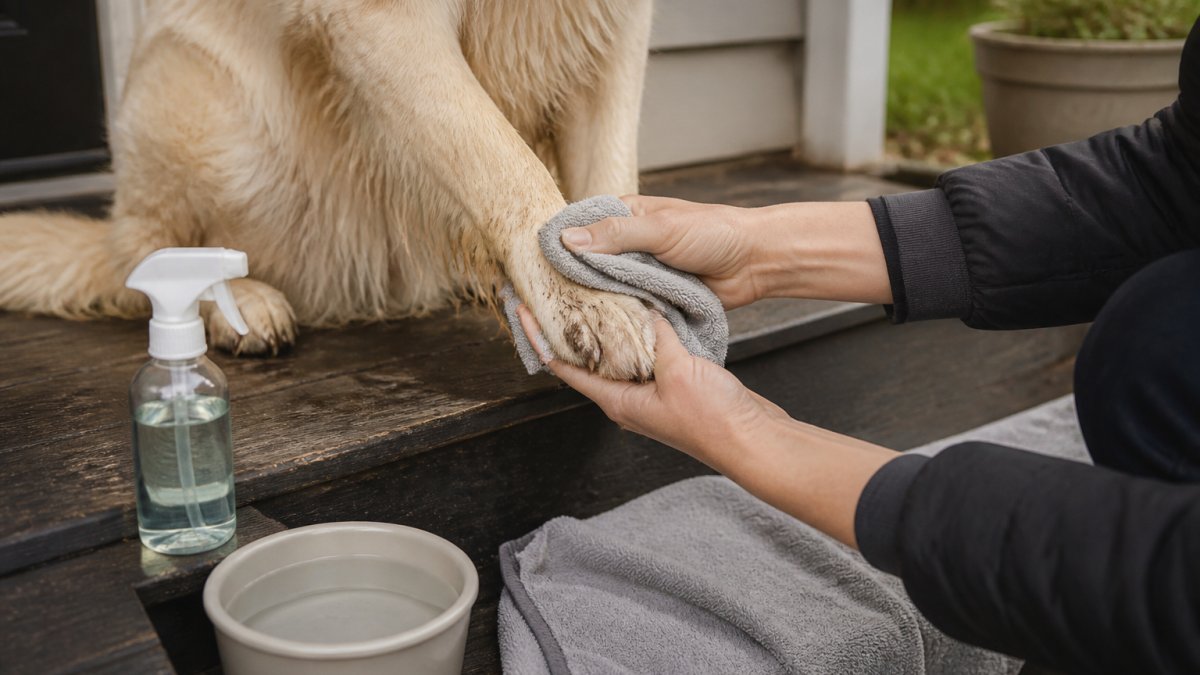
A common mistake is scrubbing hard. Paw pads are tough, but the skin between the toes is thin. Gentle pressure is enough.
Another mistake: skipping the drying step. Damp fur between the toes is where yeast grows. Dry paws are healthy paws.
Hypochlorous Acid Spray for Dogs: How It Works and Why It's Lick-Safe
Hypochlorous acid is a cleaning agent your pet's body already produces. White blood cells make it to fight germs. That is why it is gentler than most cleaners.
A hypochlorous acid spray for dogs works by breaking down dirt and microbes on contact. It then breaks down itself. No harsh residue is left behind.
That matters for licking. Your dog licks the paw, and there is nothing harsh left to swallow.
What to check on the label:
- Ingredient list: water, salt, hypochlorous acid is a clean formula
- No added fragrance: scents tempt licking and can irritate
- No alcohol: it stings cracked pads
- Storage: hypochlorous acid loses strength in sunlight, so keep it in a dark bottle
Our Hypochlorous Pet Spray is $7.99 and made in Canada. It is a Veterinary Health Product, and it is built for daily use on skin, coat, and paws.

Household Cleaners Toxic to Dogs: What Never Goes Near Paws
Some household cleaners should never touch a paw. Not diluted, not "just a little." Never.
Keep these away from paws and floors your dog walks on:
- Bleach and bleach-based sprays
- Floor cleaners with pine oil or phenol
- Antifreeze (a few drops can be deadly)
- Concentrated dish soap on cracked pads
- Lawn and garden chemicals
- Scented disinfectant wipes
The Canadian Veterinary Medical Association and Health Canada both publish pet safety guidance worth checking. If you think your dog swallowed a cleaner, call your vet or a pet poison line right away. Do not wait for symptoms.
A simple rule: if the label says "keep away from children," keep it away from paws too.
What to Look For in a Safe Pet Paw Cleaner for Licking
A safe pet paw cleaner for licking meets five checks. Run any product through this list before you buy.
| Check | What to Look For | Why It Matters |
|---|---|---|
| Ingredient list | 3-5 simple ingredients | Fewer unknowns to swallow |
| Fragrance | None added | Scents trigger licking |
| Alcohol | Not on the label | Stings cracked pads |
| Rinse needed | No | Less residue left behind |
| Made for pets | Pet-specific labeling | Human products are not tested on pets |
A few more things to weigh:
- Spray vs. wipes: sprays reach between the toes. Wipes are handy for travel.
- Bottle size: a small bottle you refill costs less over time.
- Storage: dark bottles protect the formula.
- Vet guidance: ask your vet about any product for a pet with a skin condition.
One more thing most guides skip: test on a small area first. Spray one paw, wait a day, and watch for redness. Every pet is different, and a patch test costs you nothing.
Frequently Asked Questions
What can I use to clean my dog's paws if they lick them?
A gentle, lick-safe option is a hypochlorous acid spray made for pets, like e11ement Pet's Hypochlorous Pet Spray ($7.99). It contains only water, salt, and HOCl, the same molecule a pet's immune system produces. Spray the paws, wipe away dirt, and let them air dry. Avoid anything with fragrance, alcohol, or harsh detergents, since residue left on the paw pads gets ingested when your dog grooms. If licking continues after cleaning, have a veterinarian check for allergies or infection.
Are pet paw cleaners safe if a dog licks their paws afterward?
It depends entirely on the ingredients. A safe pet paw cleaner for licking should contain no alcohol, bleach, fragrance, or essential oils, because those are harmful when swallowed. Hypochlorous acid breaks down into salt and water, so small amounts left on the paws are not a concern. Always read the label and check for a Veterinary Health Product number.
Can I use hypochlorous acid spray on my pet's paws?
Yes. Hypochlorous acid spray for dogs is designed for daily use on skin, coat, and paws. Spray from a short distance, wipe off visible dirt, and let the paws dry naturally. It is gentle enough for routine use after walks or hikes. Do not spray directly into eyes or open wounds, and stop use if you notice irritation. For pets with a diagnosed skin condition, confirm the routine with your veterinarian.
What household cleaners are unsafe for pets to lick off their paws?
Bleach, ammonia-based cleaners, floor disinfectants with quaternary ammonium compounds, oven cleaners, drain openers, and anything containing phenols are dangerous if a pet licks them from their paws. Essential oils such as tea tree and eucalyptus are also risky. Store these products out of reach, rinse floors with water after cleaning, and keep pets off treated surfaces until dry. If you suspect exposure, contact your veterinarian or a pet poison helpline immediately.
Paw care gets harder when your dog licks everything off. That is exactly the problem we built for. e11ement Pet makes a gentle hypochlorous acid spray with three ingredients, made in Canada, and safe for daily use on paws, skin, and coat. It uses the same molecule your pet's immune system makes. Get started with e11ement Pet and make after-walk cleanup quick, calm, and lick-safe.


